Revco Logo_White

One Patient.
One Experience.
One Financial Continuum.

Explore the 4-Step Financial Care Continuum to see how leading healthcare organizations can close the gaps in their own operations.

Revco Financial Care Continuum_Hero


Health systems and the revenue cycle industry have spent years treating insurance recovery and self-pay as separate workflows. Patient's don't.

The patient who has insurance also receives a bill. That's one financial journey, not two departments. As insurance complexity, automation, affordability concerns, and patient expectations continue to change, the gap between those workflows can create more than operational inefficiency. It can create revenue leakage, patient frustration, and a disconnected patient financial experience. These 4 steps can help your healthcare organization recognize the gaps and take the right approach to closing them.

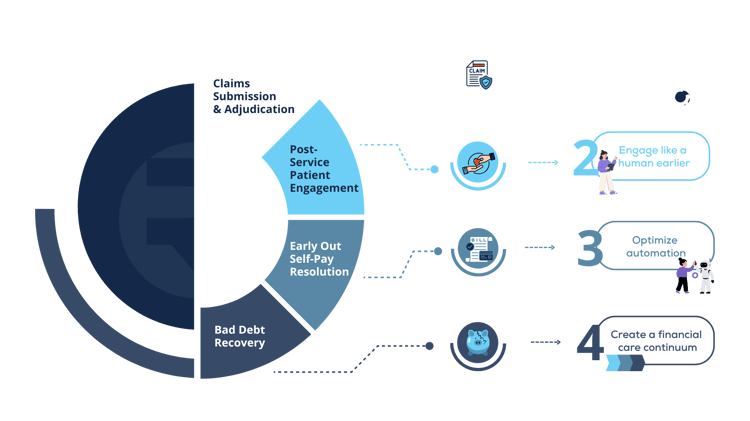
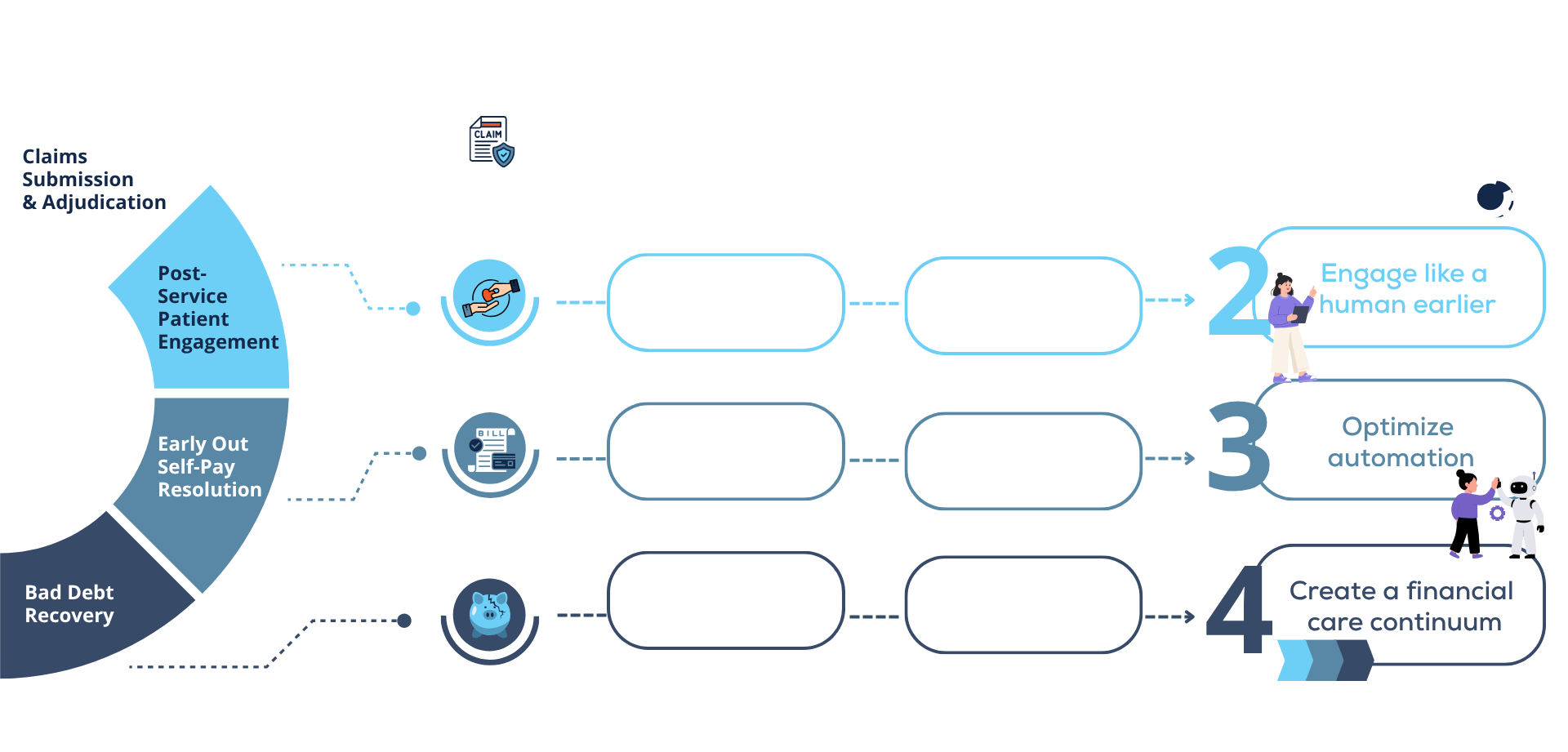
The Financial Care Continuum

Revco Financial Care Continuum-1

Explore the Continuum:

STEP 1: Connect Insurance Recovery to Early Out Self-Pay

Step 1_4 Step Guide to Close Operational Gaps Before the First Statement-1

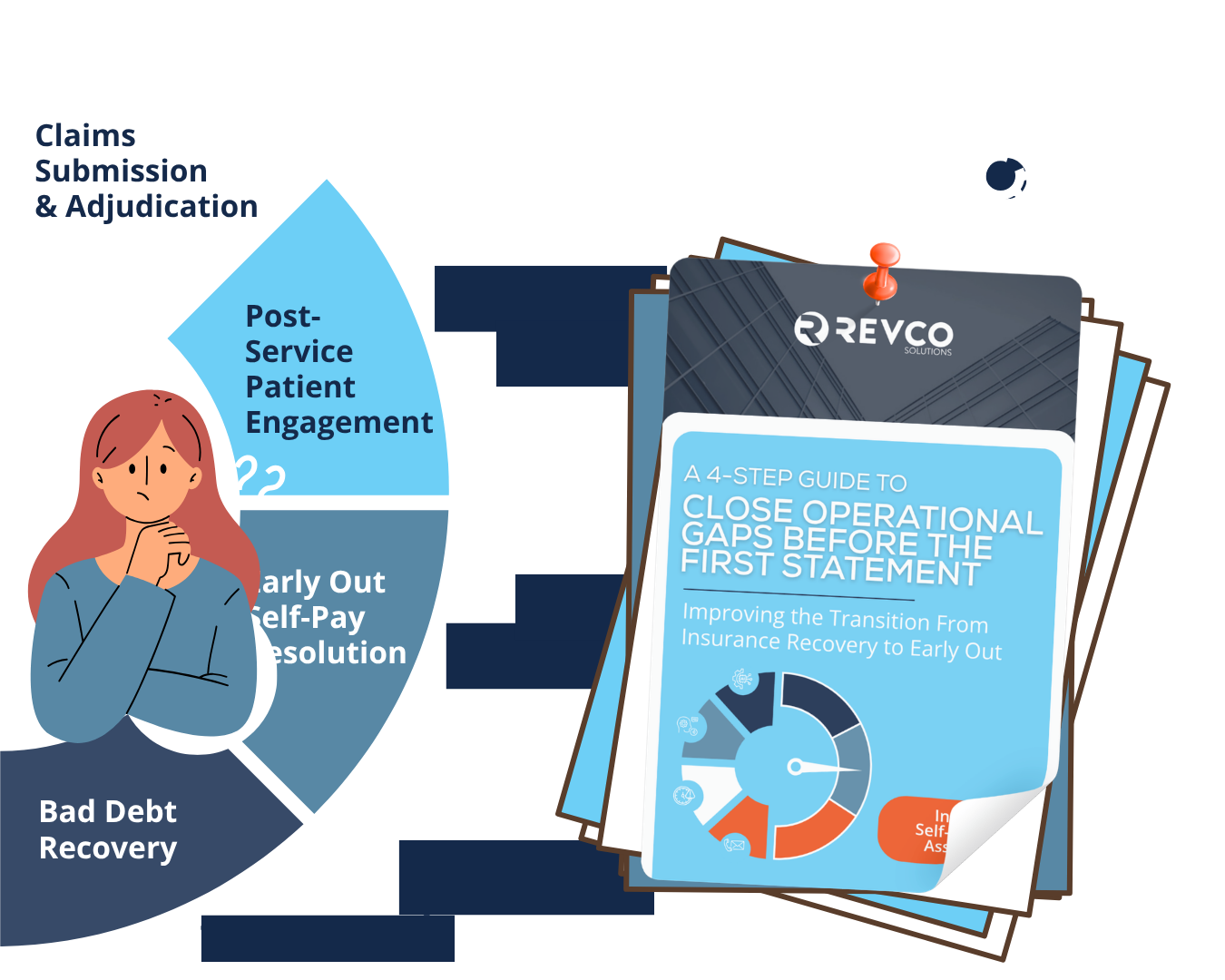
4 Steps to Closing Operational Gaps Before the First Statement

Patients don't see the handoff between insurance, but operational gaps between these teams can have a very real impact on what the patient experiences next.

Inside the guide:

  • Identify four of the greatest operational gaps created by a disconnect between financial teams
  • Clear action steps to close those gaps
  • Scorecard to identify how well your teams are working together today.

You've connected how the balance is created to what happens next. Now look at the step that could change everything.

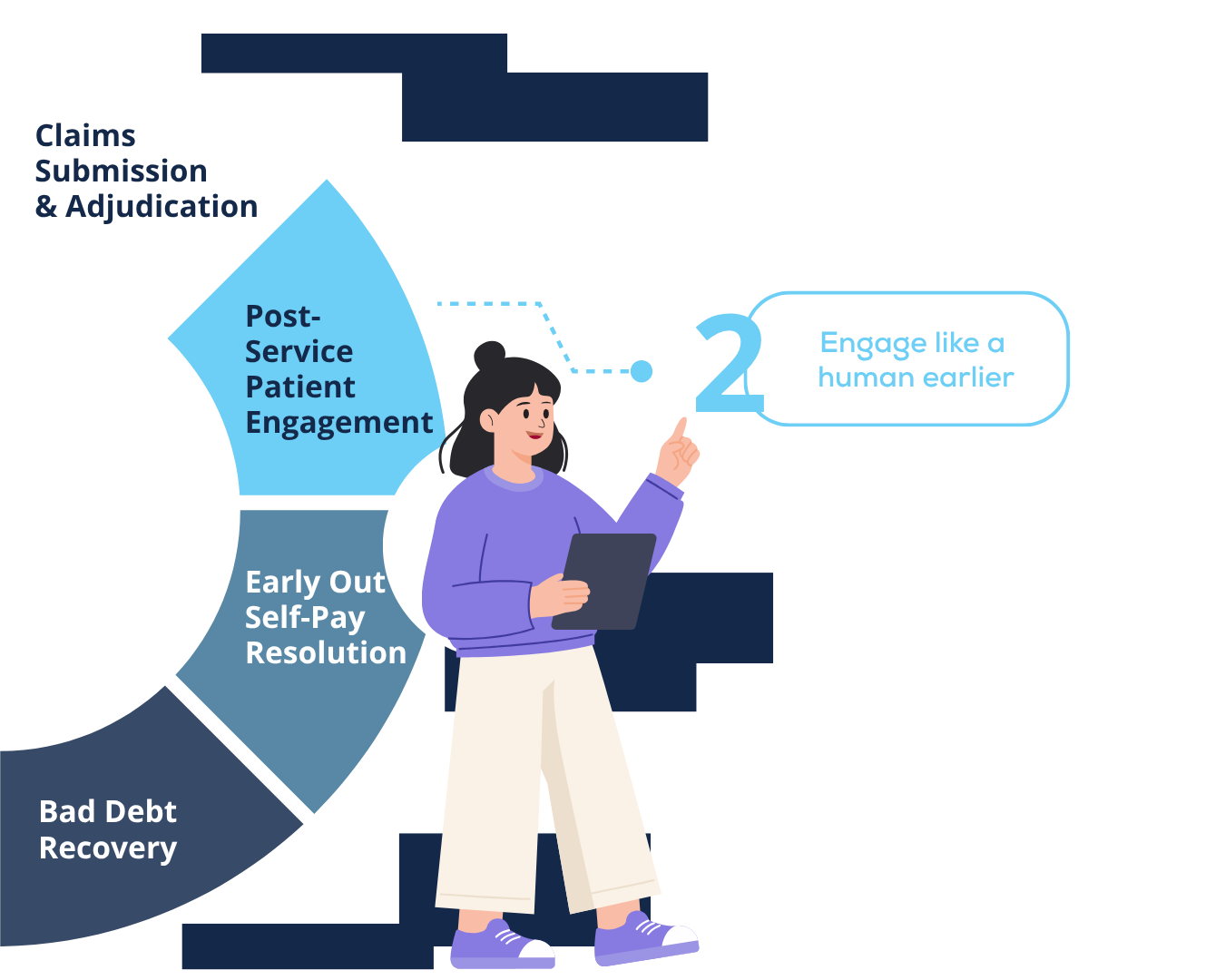
STEP 2: Connect with Patients in the First 30 Days

Step 2_The Financial Care Continuum Flipbook-2-1

Automation has made it easier than ever to send a statement, text a reminder, deliver a payment link, or notify a patient about a balance.

But easier doesn't always mean better. Today's patient balances are increasingly complex. Some involve denied claims or underpayments. Others require payment plans, have affordability concerns, or involve language barriers and patients who simply prefer to talk to a person. The question isn't whether health systems should automate. It's who is being left behind by automation? 

Explore the Financial Care Continuum through a visual experience designed to show why the first 30 days after the first statement can be a critical window for human engagement:

1-1

As health systems extend internal collection timelines and invest heavily in automations that simplify the patient financial experience, increasingly complex patient stories require something technology alone cannot provide: informed, compassionate conversations. 

2 no logo
Health systems have invested heavily in automation to improve efficiency, but it often pushes meaningful conversations later in the patient journey. As digital outreach expands, opportunities to engage patients while trust and responsiveness remain highest are reduced significantly.
3 no logo
Technology can make outreach easier, but some patients still need a human connection. These five profiles show where technology and automation are leaving patients behind. The balances aren’t routine, they are the hardest conversations. But the right combination of technology and human engagement can close the gap.
4 no logo

Technology delivers notifications.​ People deliver understanding.​ Recovery begins with a meaningful conversation.​

5 no logo
Silos create gaps. Gaps create confusion.
6 no logo
7 no logo
8 no logo
9

So what happens when automation changes the role of the human?

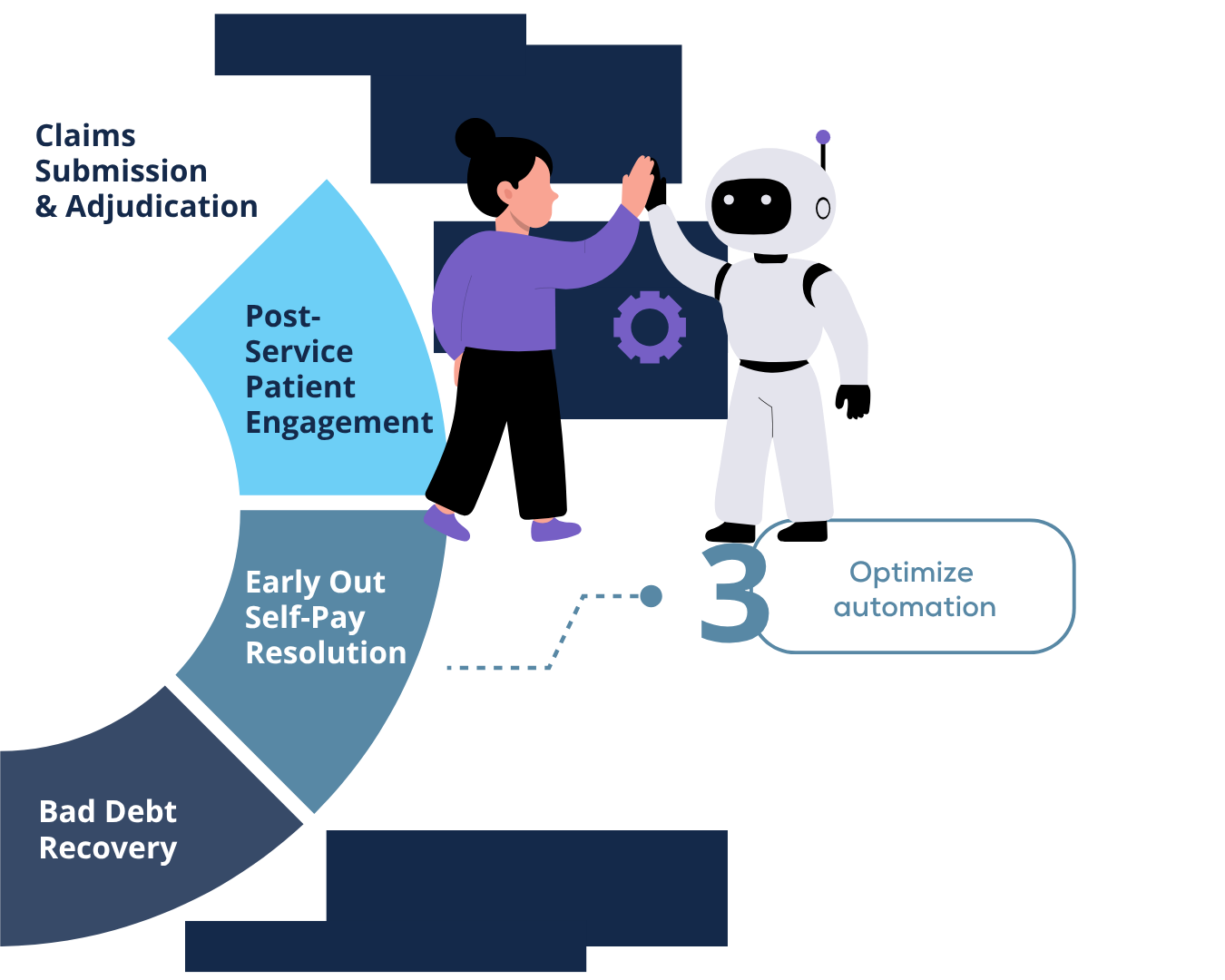
Step 3: Optimize Automation with the Early Framework in Mind

Step 3_Optimizing Automation in Early Out Revenue Roundtable-1

Revenue Roundtable: Coming Soon!

Join us in October for our next Revenue Roundtable interview. We're sitting down with one of the country's top health systems about the challenges and benefits of balancing automation with early engagement for a streamlined patient financial experience.

In the meantime, check out some of our other interviews and be sure to subscribe to get early access to this interview!

We've identified the gaps. Now see what closing them can look like.

Step 4: Streamline the Journey

Step 4_Streamline the Patient Financial Journey with Revco-2-1

$152M in Additional Collections by Streamlining the Patient Journey

Insurance Follow-Up + Call Center Support + Early Out Self-Pay = One Journey

As a prominent midwestern academic medical center worked to get back in-network following a contract dispute with Anthem, they identified that their patients needed more than just another text reminder. 
 
By streamlining three separate workflows into one patient journey, the health system not only improved the patient financial experience, they also collected an additional $152.4M in insurance follow-up and early out self-pay revenue in just six months, improved visibility into payer variability, and evolved their workflows across their total patient population.

Where Technology Meets Human Connection

At Revco, we believe automation should make every human interaction more meaningful.

Early out has become the point where insurance complexity, care affordability, technology, and human connection all intersect.

Today's patient balances are more complex than ever, and as health systems strive to simplify the experience by automating more outreach, these increasingly complex patient stories require something technology alone can't provide: informed, compassionate conversations.

Creating one, human-led financial experience across the patient journey does more than accelerate cash. It creates patient trust and establishes continuity of care that supports healthier communities.

At Revco, continuity matters. We believe exceptional revenue cycle performance is about more than financial results. It's about protecting our clients' brands, preserving patient trust, and strengthening relationships through every interaction.