One Patient.
One Experience.
One Financial Continuum.
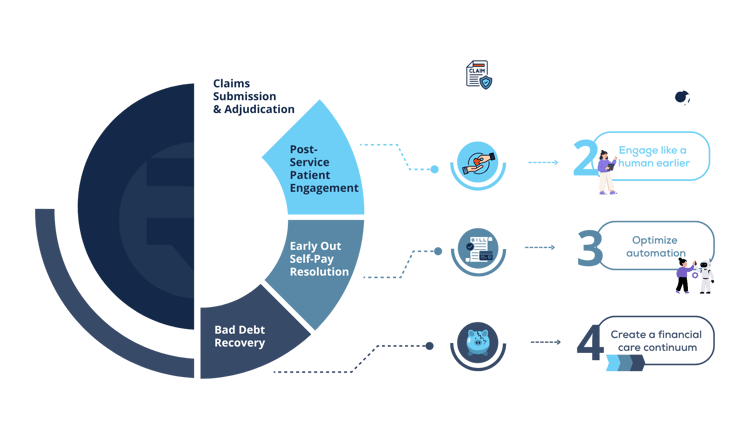
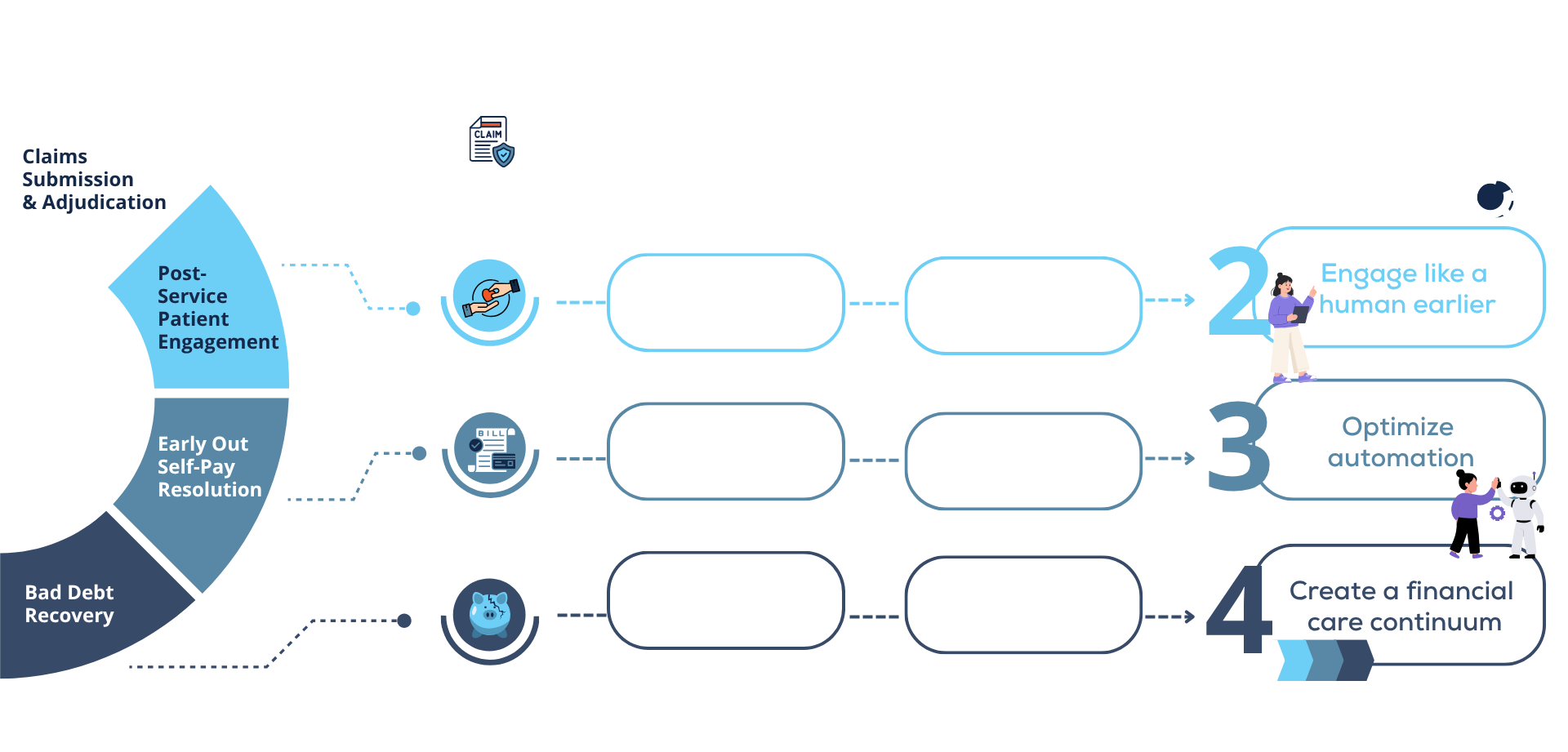
Explore the 4-Step Financial Care Continuum to see how leading healthcare organizations can close the gaps in their own operations.

Health systems and the revenue cycle industry have spent years treating insurance recovery and self-pay as separate workflows. Patient's don't.
The patient who has insurance also receives a bill. That's one financial journey, not two departments. As insurance complexity, automation, affordability concerns, and patient expectations continue to change, the gap between those workflows can create more than operational inefficiency. It can create revenue leakage, patient frustration, and a disconnected patient financial experience. These 4 steps can help your healthcare organization recognize the gaps and take the right approach to closing them.
The Financial Care Continuum

Explore the Continuum:
STEP 1: Connect Insurance Recovery to Early Out Self-Pay

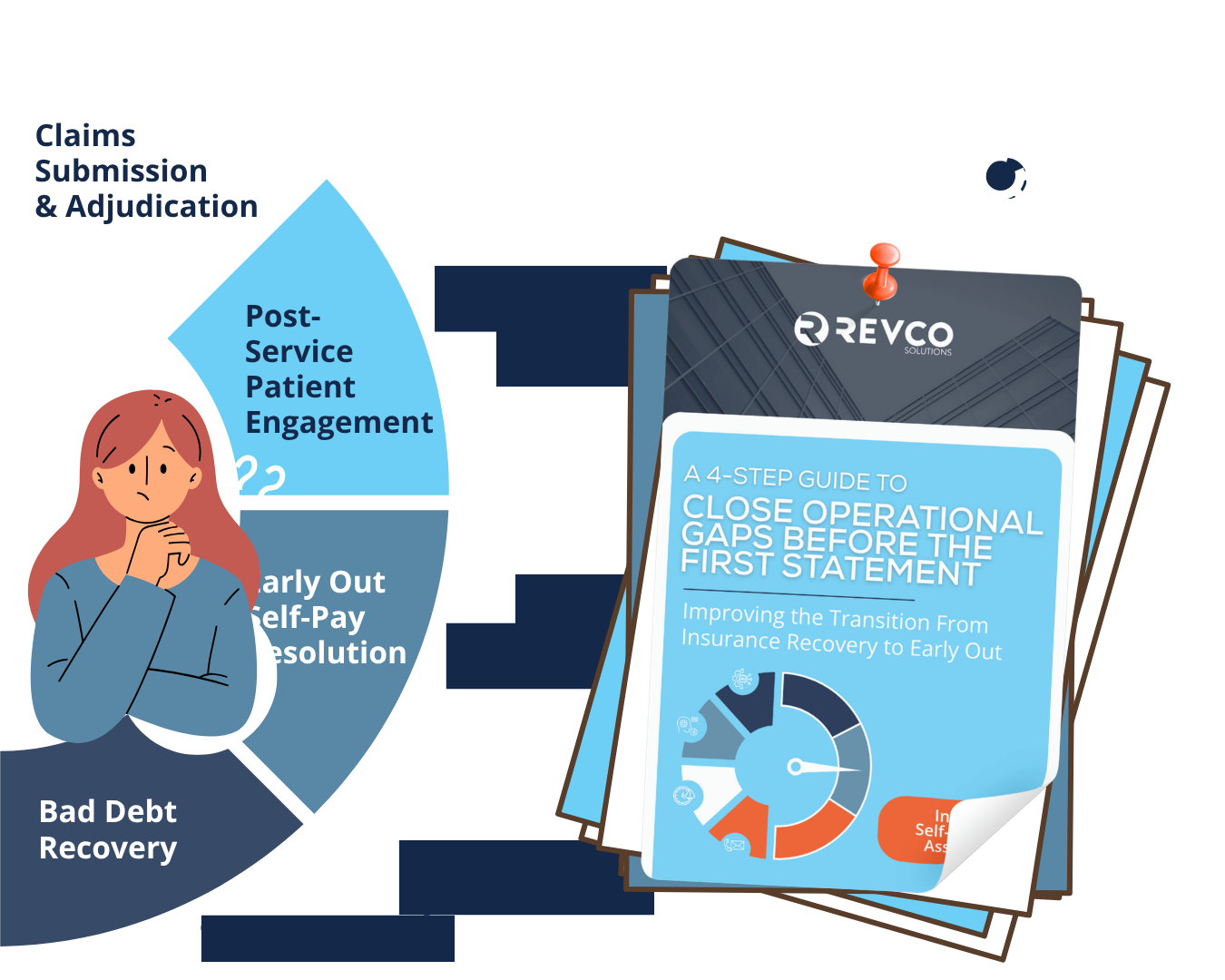
4 Steps to Closing Operational Gaps Before the First Statement
Patients don't see the handoff between insurance, but operational gaps between these teams can have a very real impact on what the patient experiences next.
Inside the guide:
- Identify four of the greatest operational gaps created by a disconnect between financial teams
- Clear action steps to close those gaps
- Scorecard to identify how well your teams are working together today.
You've connected how the balance is created to what happens next. Now look at the step that could change everything.
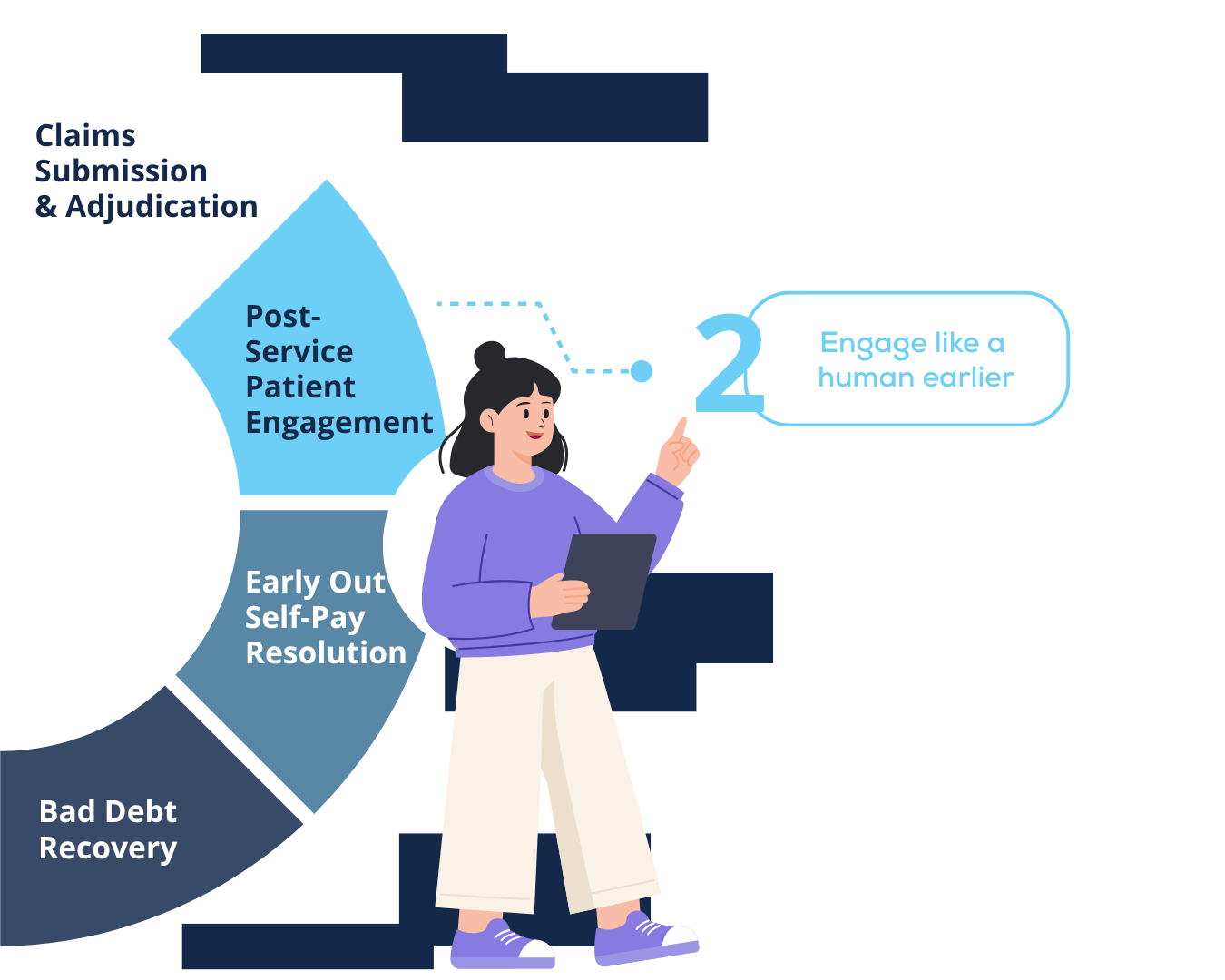
STEP 2: Connect with Patients in the First 30 Days

Automation has made it easier than ever to send a statement, text a reminder, deliver a payment link, or notify a patient about a balance.
But easier doesn't always mean better. Today's patient balances are increasingly complex. Some involve denied claims or underpayments. Others require payment plans, have affordability concerns, or involve language barriers and patients who simply prefer to talk to a person. The question isn't whether health systems should automate. It's who is being left behind by automation?
Explore the Financial Care Continuum through a visual experience designed to show why the first 30 days after the first statement can be a critical window for human engagement:
As health systems extend internal collection timelines and invest heavily in automations that simplify the patient financial experience, increasingly complex patient stories require something technology alone cannot provide: informed, compassionate conversations.
Technology delivers notifications. People deliver understanding. Recovery begins with a meaningful conversation.
So what happens when automation changes the role of the human?
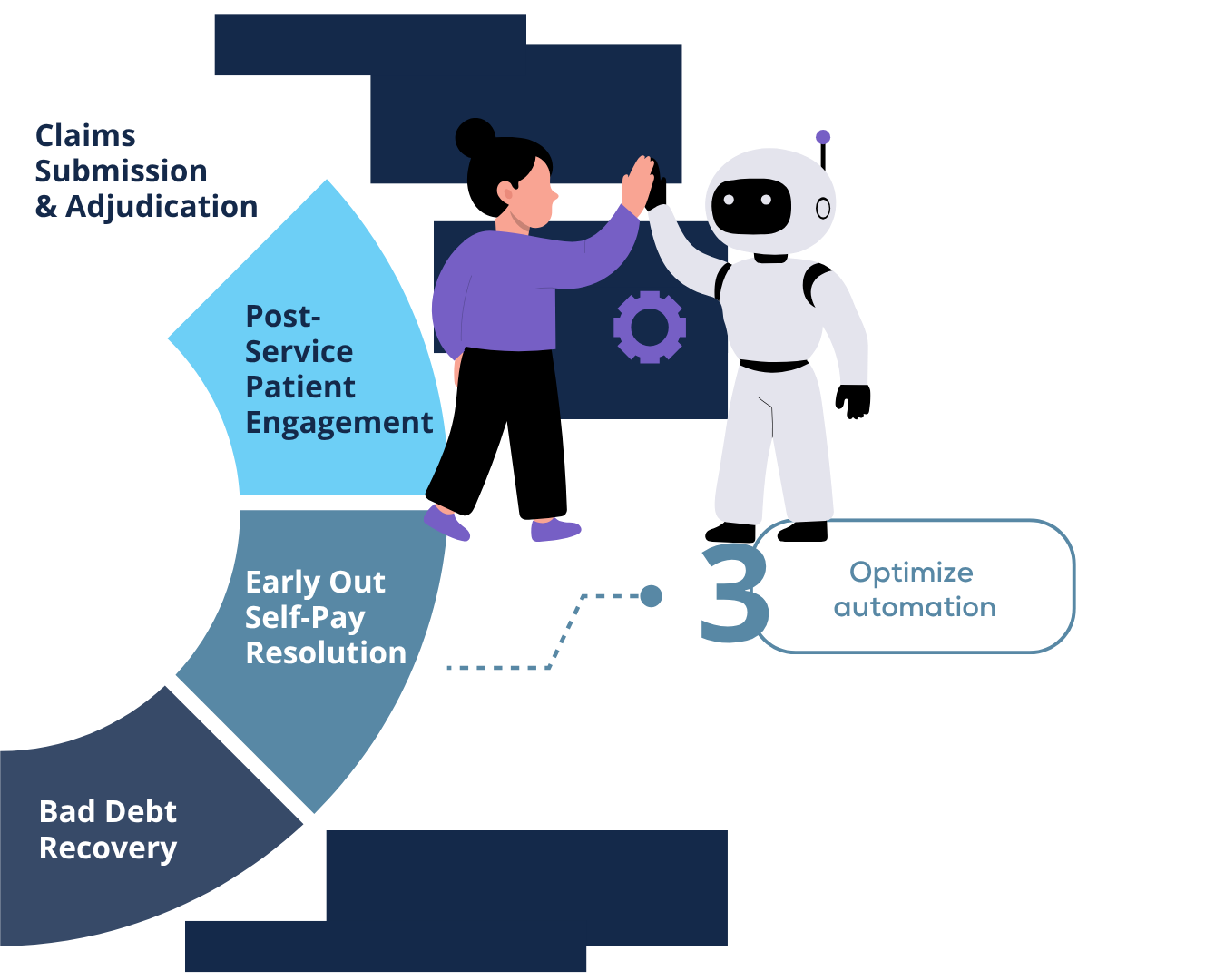
Step 3: Optimize Automation with the Early Framework in Mind

Beyond Automation: Putting the Human Experience at the Center of AI
We sat down with Sunny Nanda, GM of Healthcare Customer Experience at NiCE, to explore how healthcare organizations can leverage AI to improve operational efficiency while keeping the human experience at the center.
This conversation tackles some critical questions for healthcare leaders tasked with automating processes that impact patients:
- Efficiency vs. Effectiveness | How to measure the real impact of automated processes
- Balancing AI & Human Interaction | Three signals that indicate when a patient needs more than just another automated touchpoint, and how to determine where and how AI is deployed
- Guiding Principles for Keeping Humans at the Center | The evolution of AI and human interaction, how to prepare for rapid shifts in how we work, and the single question all patient-facing AI should answer
We've identified the gaps. Now see what closing them can look like.
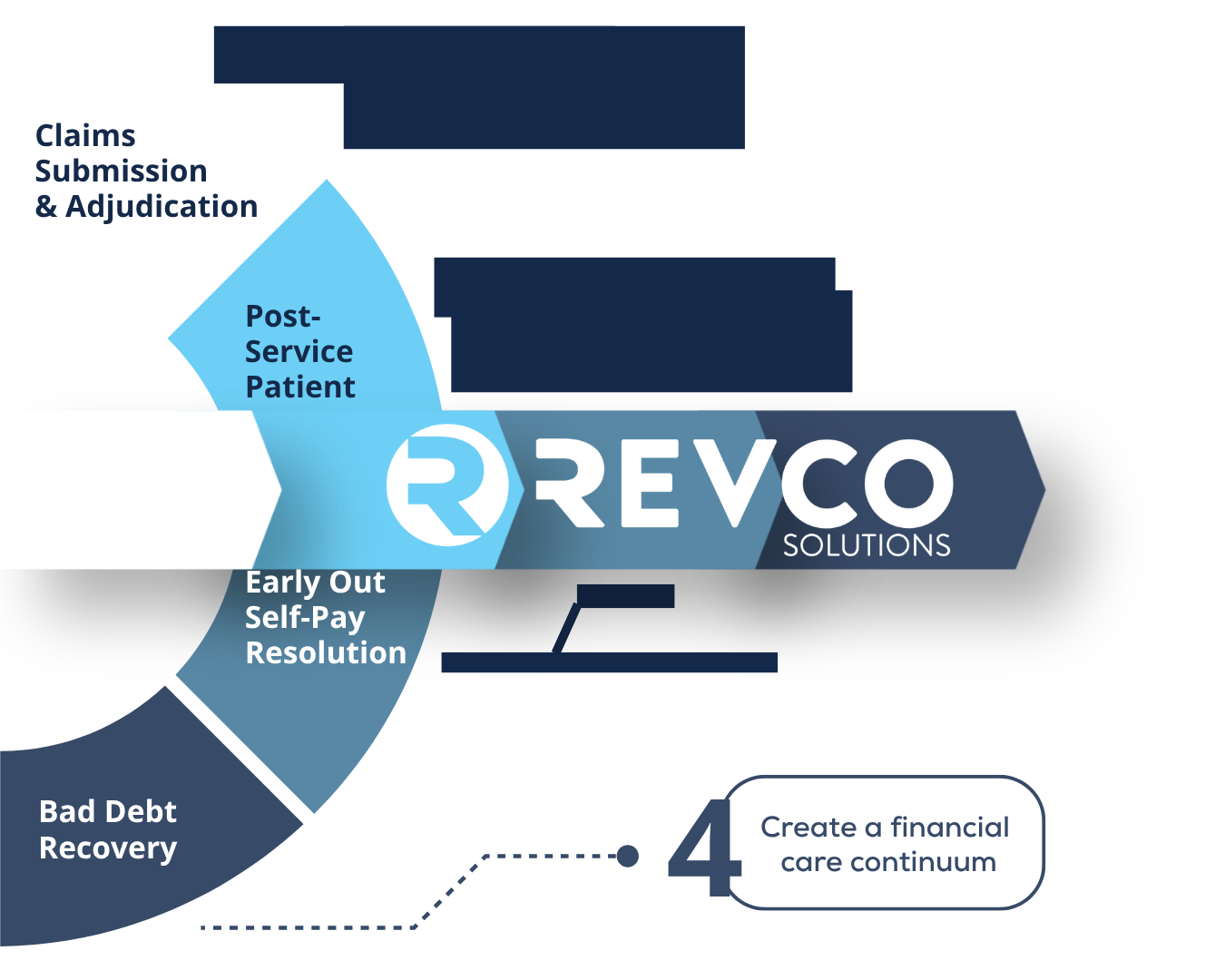
Step 4: Streamline the Journey

$152M in Additional Collections by Streamlining the Patient Journey
Insurance Follow-Up + Call Center Support + Early Out Self-Pay = One Journey
Where Technology Meets Human Connection
At Revco, we believe automation should make every human interaction more meaningful.
Early out has become the point where insurance complexity, care affordability, technology, and human connection all intersect.
Today's patient balances are more complex than ever, and as health systems strive to simplify the experience by automating more outreach, these increasingly complex patient stories require something technology alone can't provide: informed, compassionate conversations.
Creating one, human-led financial experience across the patient journey does more than accelerate cash. It creates patient trust and establishes continuity of care that supports healthier communities.
At Revco, continuity matters. We believe exceptional revenue cycle performance is about more than financial results. It's about protecting our clients' brands, preserving patient trust, and strengthening relationships through every interaction.