
FINANCIAL CARE CONTINUUM | STEP 1
Close the Gaps Between Insurance Recovery & Self-Pay
Insurance follow-up, denial management, and early out self-pay may live in different workflows but for patients they're part of the same financial journey. Learn where the gaps occur and what your organization can do to close them before they impact patient engagement and recovery.
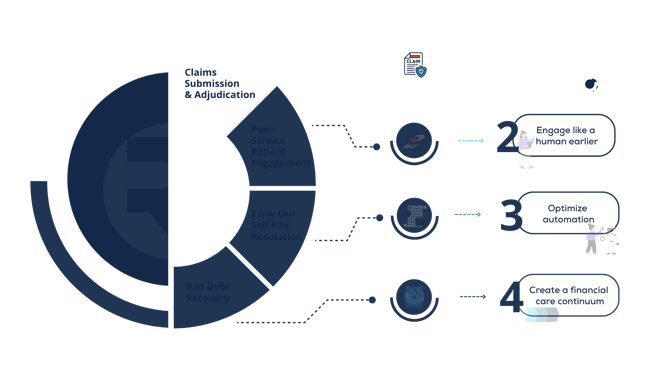
Close Operational Gaps Before the First Statement

The patient doesn't see the handoff. But they feel it.
Health systems and revenue cycle teams have spent years treating insurance recovery and self-pay as separate workflows.
Patients don't.
The patient who has insurance also gets a bill. What happens between those two moments is one financial journey, not two departments.
When patient access, insurance management, and patient financial services operate in siloes, operational gaps can emerge long before an account reaches patient responsibility. Those gaps can make it harder to reach patients, slow engagement, and ultimately contribute to lower self-pay recovery and higher bad debt.
Four Gaps Worth Looking For:
Accounts never contacted successfully
Outdated contact information, limited channels, weak right-party contact validation, and insufficient retry strategies can leave accounts without a meaningful patient touch.
Claim delays impact patient engagement
When claims take weeks or months to resolve, patients may be less prepared to understand or address a balance by the time the first statement arrives.
Automation leaves some patients behind
Digital outreach can make outreach more efficient, but patients with complex balances, affordability concerns, or questions still need an opportunity for human connection.
Accounts not segmented by likelihood to pay
When every account receives the same treatment, valuable team resources may not be focused where they can have the greatest impact.
Find the gaps. Then close them.
The 4 Steps to Closing Operational Gaps Before the First Statement guide takes a closer look at the operational disconnects that can affect self-pay performance and provides practical steps to help close them.
Inside the guide:
- Four operational gaps that can emerge between insurance recovery and self-pay
- Practical steps for closing each gap
- Performance scorecard to assess your current early out operations
- A framework for identifying where your organization may be missing recovery opportunities
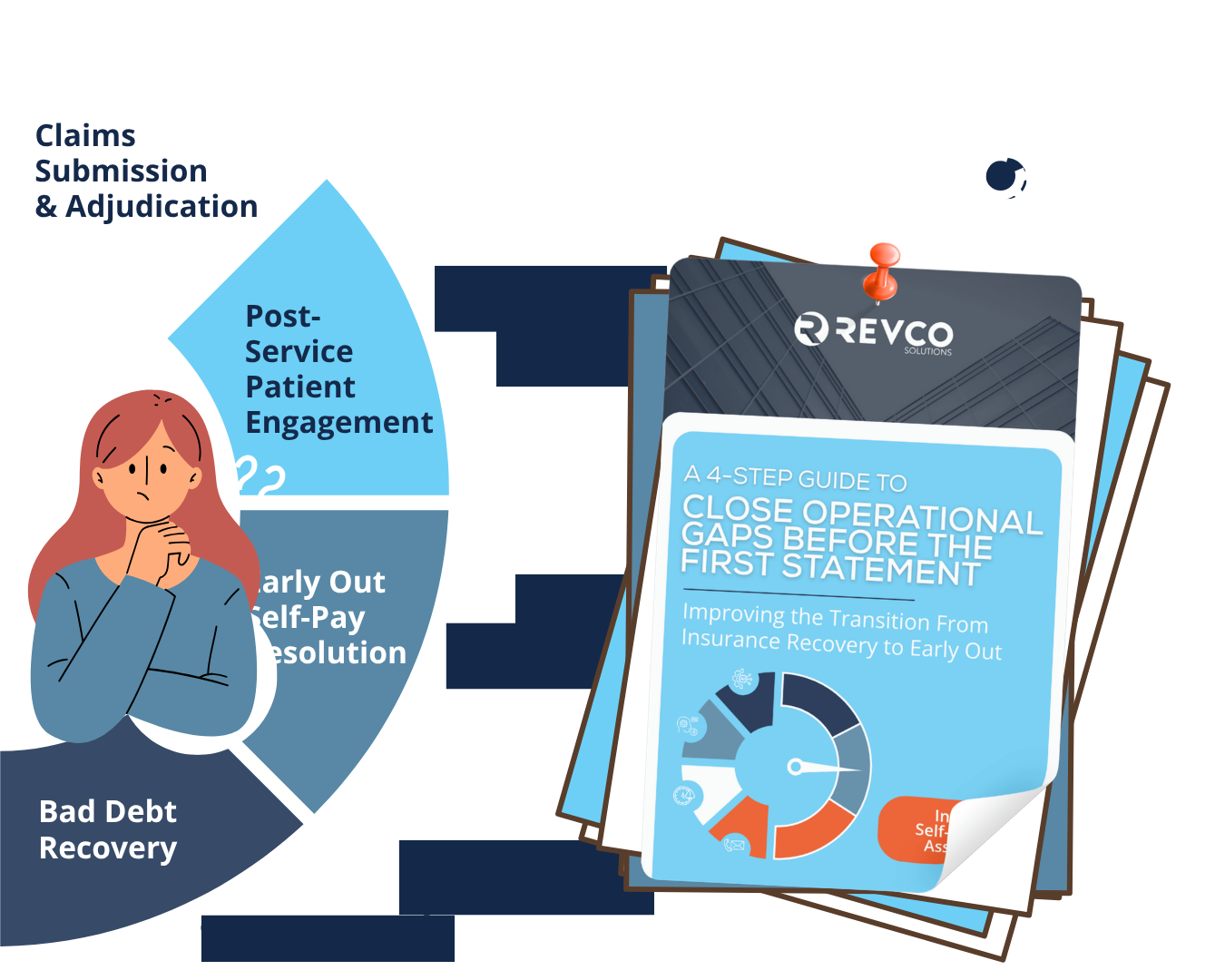
Close the Gap. Then Change What Happens Next.
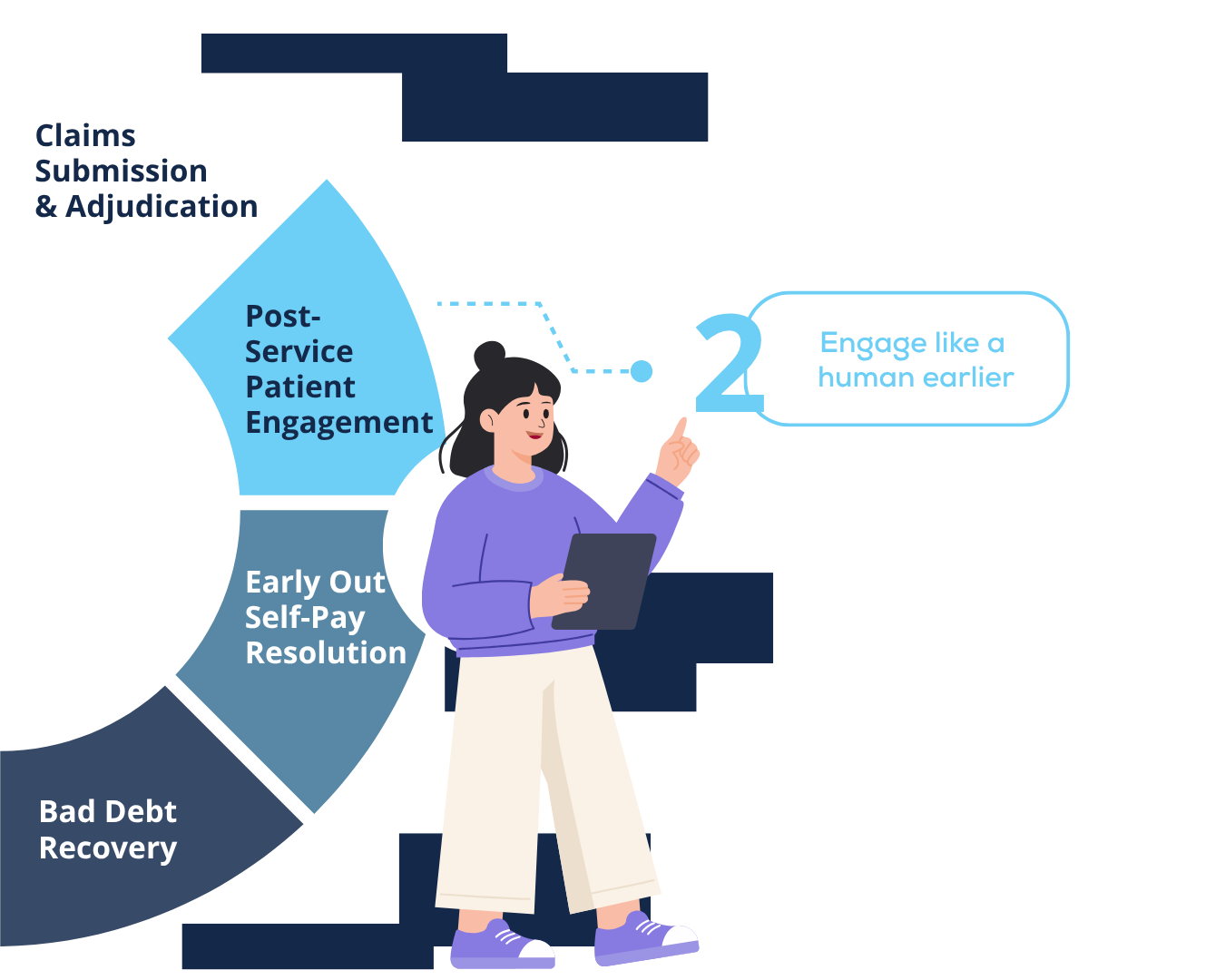
Step 2: Engage Like a Human Earlier
Connecting insurance recovery to self-pay is the first step. But once the balance reaches the patient, when and how you engage matters just as much.
Explore why the first 30 days after the first statement can be a critical window for meaningful patient engagement and where your automation could be leaving patients behind.
Continuity Matters.
At Revco, we're not just answering phones.
We're resolving gaps in the revenue cycle created by an explosion in denials, increasingly complex financial conversations, and technology-first patient engagement.
Creating one, human-led financial experience across the patient journey does more than accelerate cash. It creates patient trust and establishes continuity of care that supports healthier communities.
We believe exceptional revenue cycle performance is about more than financial results. It's about protecting our clients' brands, preserving patient trust, and strengthening relationships through every interaction. Ready to get started?